
New:VFD Trainer — Build a PowerFlex 525 circuit, then retrofit STO E-stop and 4–20 mA speed control.View the trainer →
Your Hands-On Motor Control Trainer
Learn how industrial control circuits work by wiring, commissioning, testing, and troubleshooting them yourself, right in your browser, with our guided circuit trainers. Then use the sandbox to choose your own components, wire a circuit from scratch, experiment freely, and share what you build with others.
Each trainer guides you through a complete industrial control circuit:
Learn How It Works — Before you wire anything, a guided lesson walks you through the circuit section by section. You operate it yourself, follow the current through each path, and see what fails when a protection is missing.
Wire the Circuit — Click terminals to make connections. A progress checklist tracks each section as you go.
Commission It — Power up and run the circuit — start, stop, trip the overload — and confirm each step with the multimeter, checking voltage and continuity just like you would on a panel.
Go Further — Depending on the module, diagnose injected faults or rewire the same components into alternate circuits.
Prove Your Understanding — A final test checks that you understand the circuit, not just that you followed the steps.
Free, no account needed
Circuit Categories

Motor Starters
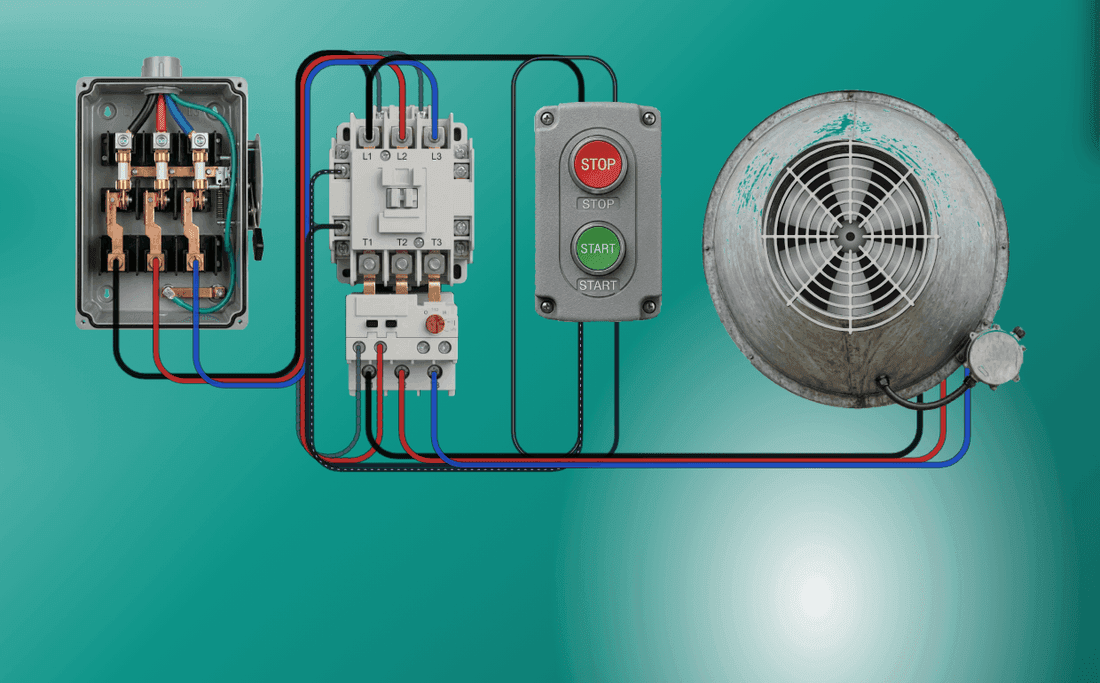
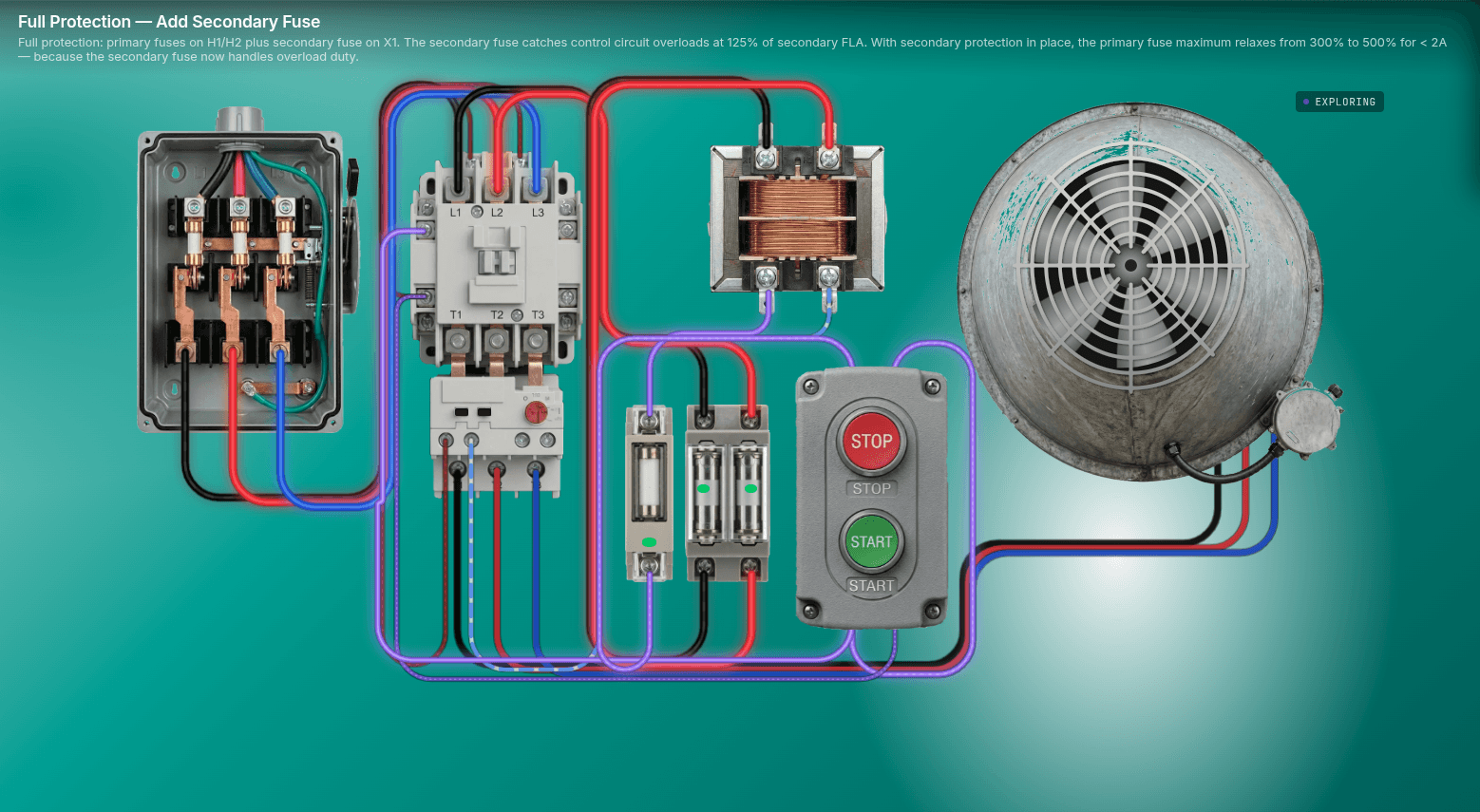
Free, no accountStart here. Wire a 3-wire start/stop circuit, then move to a control transformer with NEC fuse sizing. Fault diagnosis and troubleshooting included.
Variable Frequency Drive
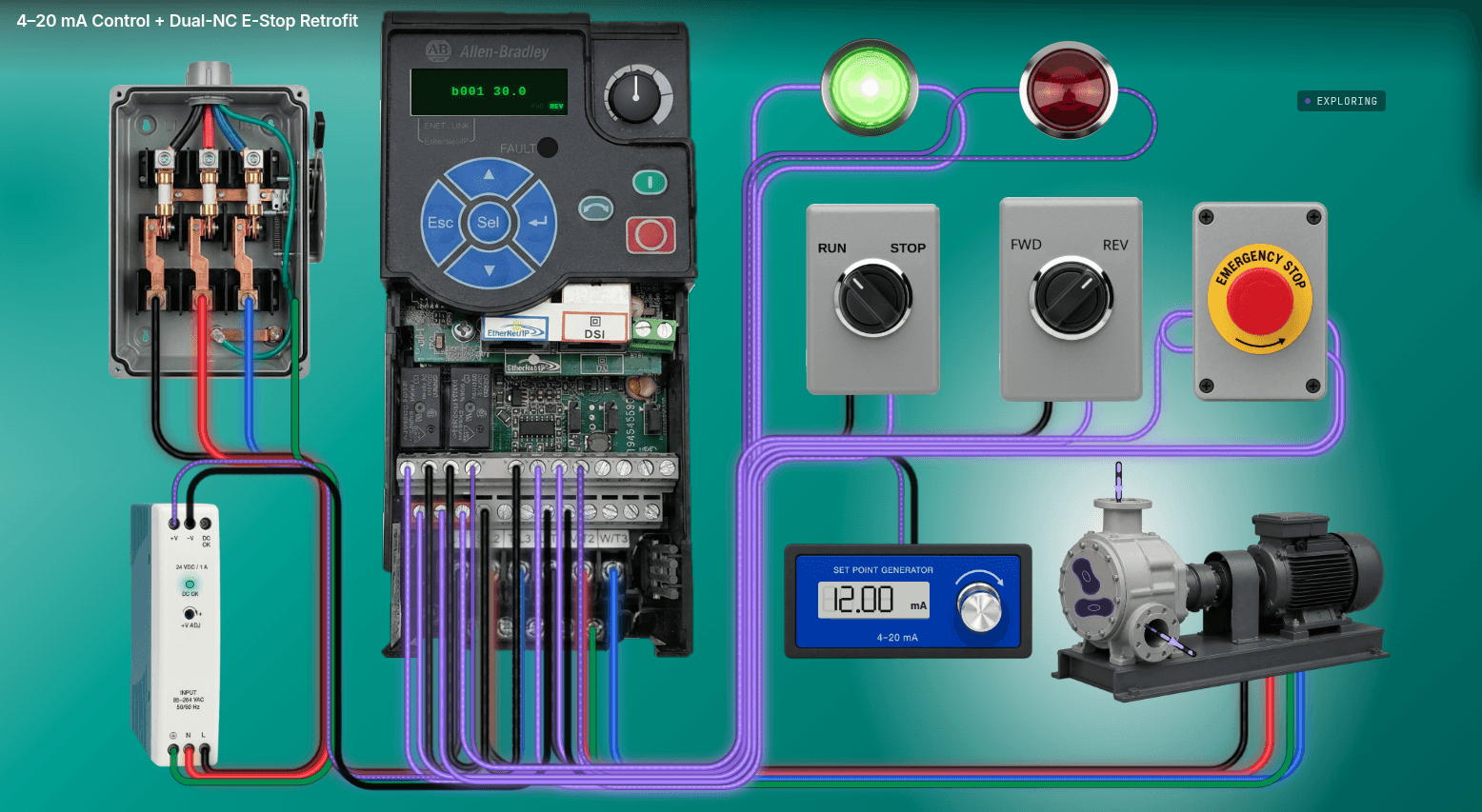
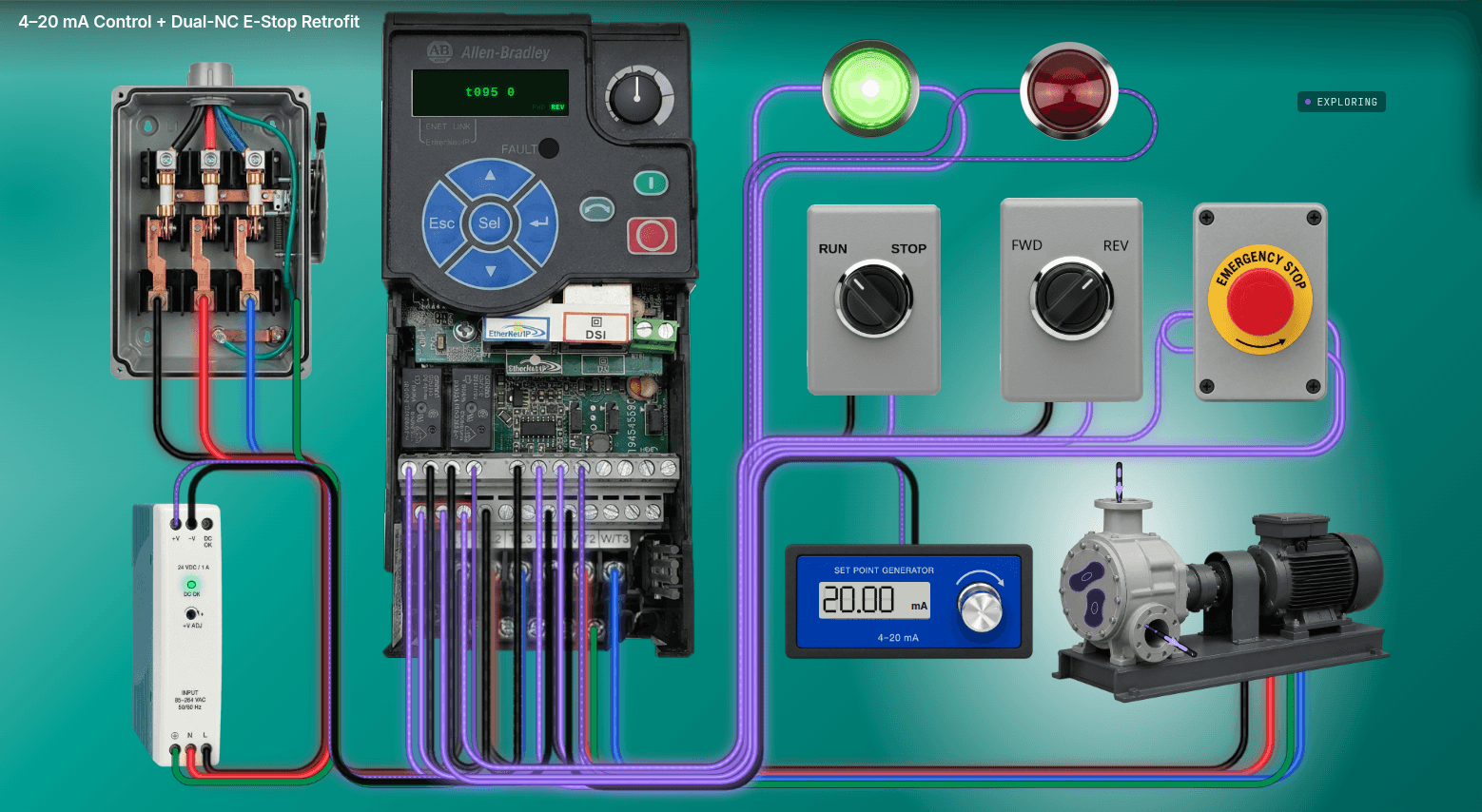
Wire and program a PowerFlex 525, commission analog speed control, then retrofit the circuit with 4–20 mA control and a dual-channel STO E-stop.

Jogging Circuits
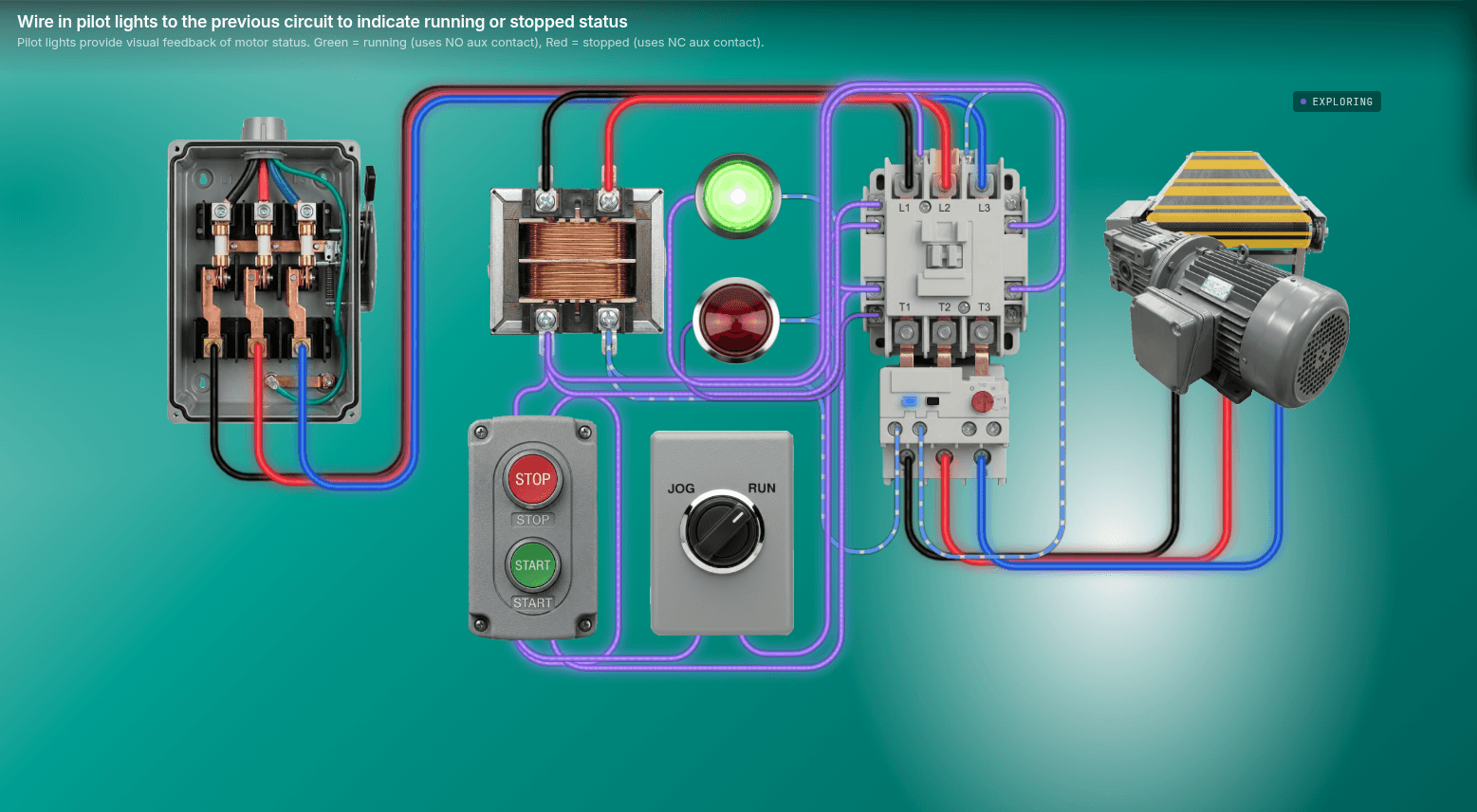
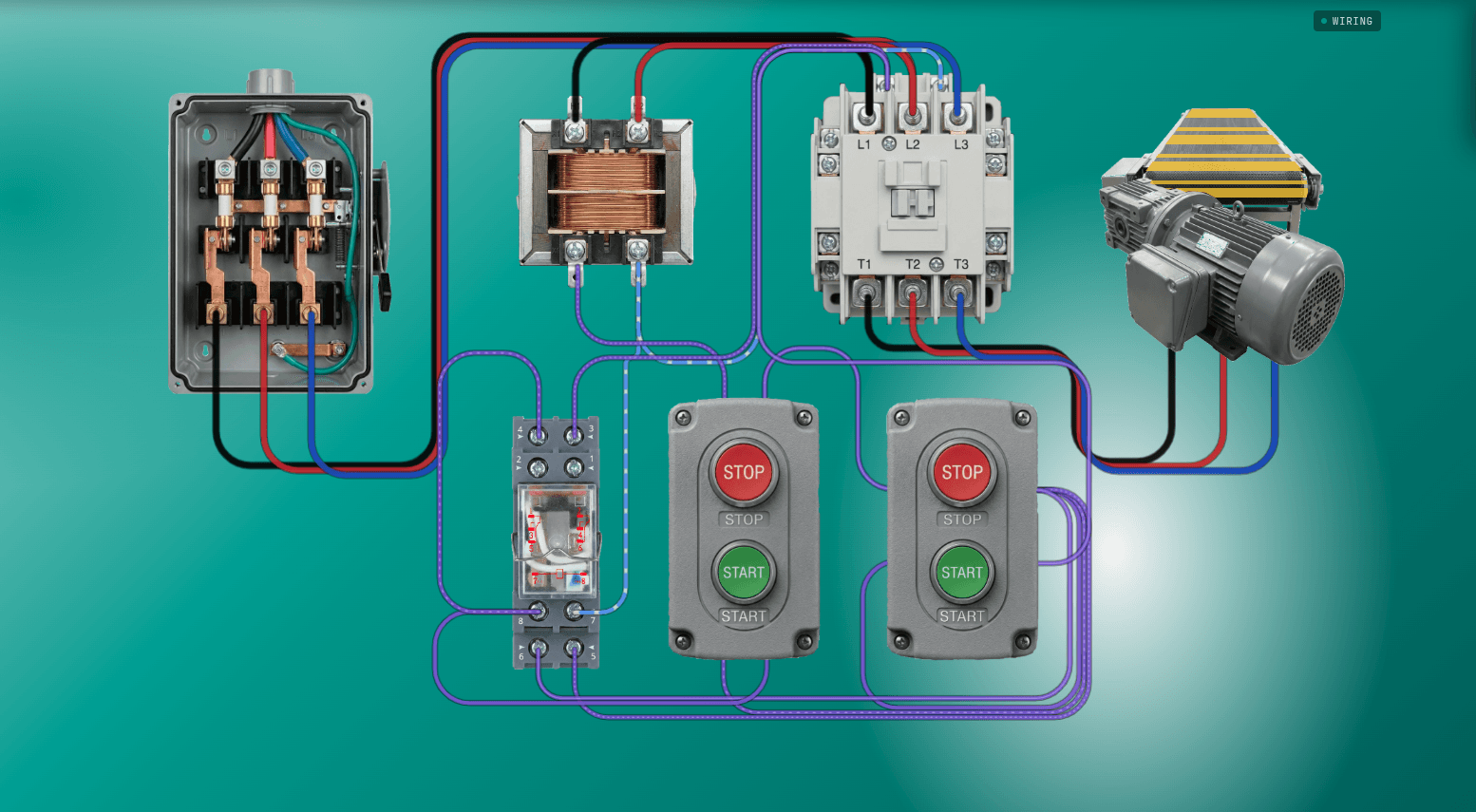
Two ways to jog a motor — a selector switch and a DPDT control relay. Learn how each one combines momentary operation with run/stop, then explore pilot light indication and two-location circuits.

Reversing Circuits
Dual-contactor reversing with electrical interlocking. Wire the load-side phase swap, understand why interlocks matter, and diagnose faults across both forward and reverse paths.
Programmable Logic Relays
Coming soon.
Learn the Circuit Before You Build It
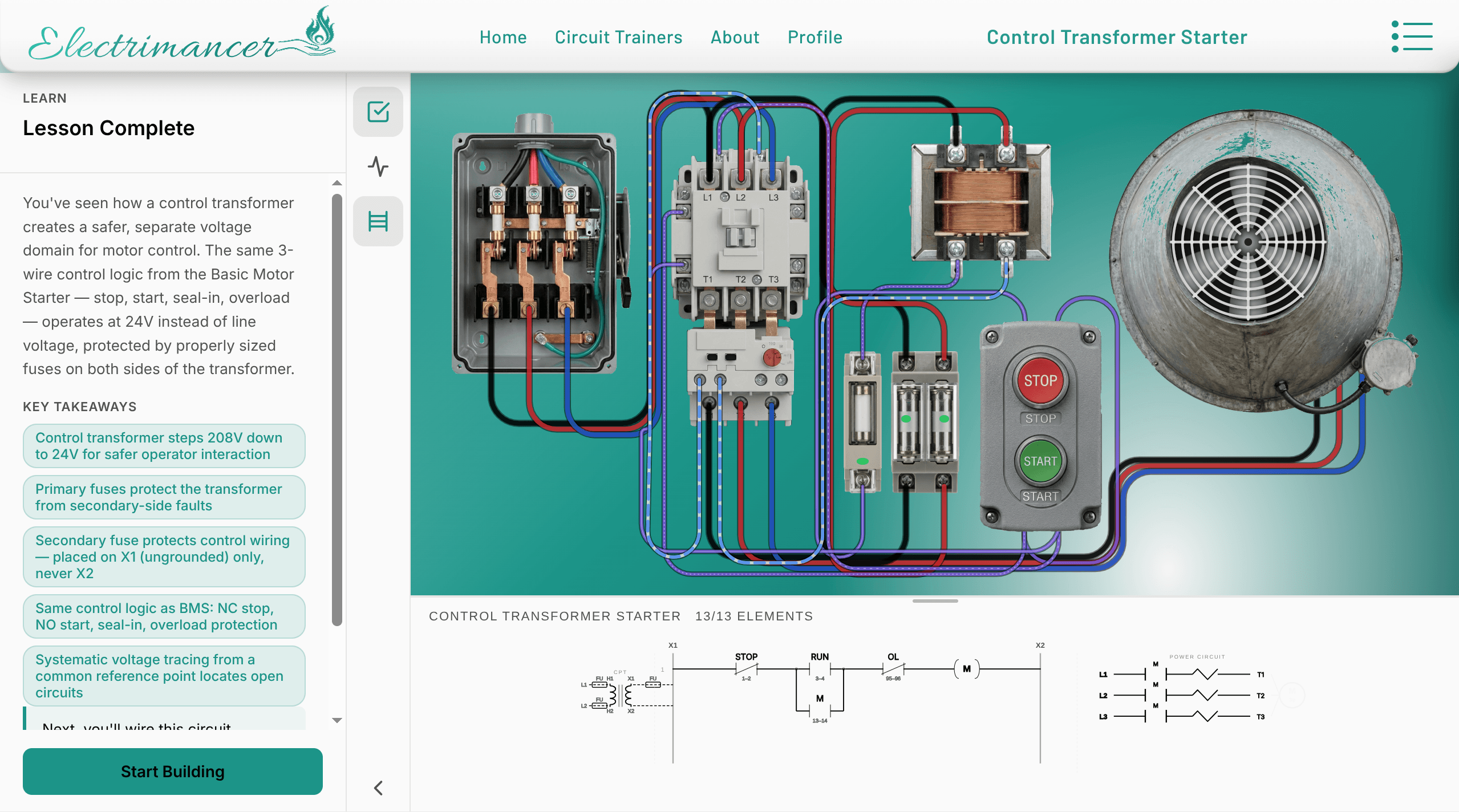
Before you place a wire, a guided lesson walks the circuit section by section. You work the buttons yourself, follow the current down each path, and see what fails when a protection is missing — so you start wiring already knowing how it works.
Go Beyond the Main Circuit
Each module includes a troubleshooting and/or a wiring exploration. Common faults are injected into the circuit that you must deduce the source of using what was learned in the lesson and your multimeter. The wiring explorations build on the original circuit, we may add indicatory pilot lights, wire the same components for different purposes, swap components, etc.
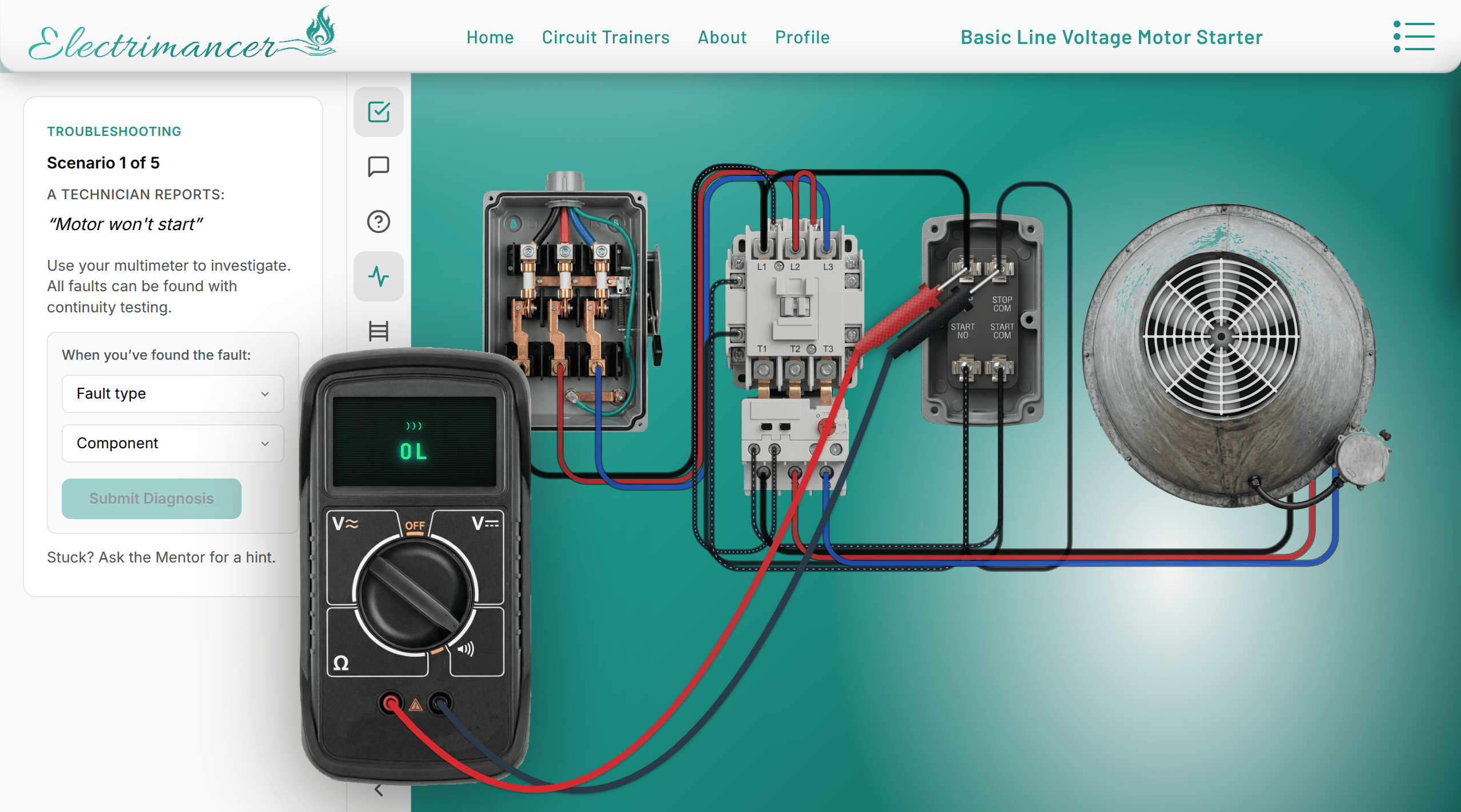
Find the Fault
A multimeter is available in every phase. During wiring, you use it to confirm a component is functioning and to verify your connections. In the troubleshooting scenarios, you probe the live circuit, read the voltages, and reason from the readings to the failed component.
Wire It Wrong, It Will Arc When Energized
Short circuits trigger an arc flash overlay and automatic power trip. The simulation has real consequences — land two phases on the same conductor and find out.
Who Uses Electrimancer
Electricians moving into motor controls work. Maintenance technicians stepping into controls roles. Engineers who can read a ladder diagram but haven't landed wires on a contactor. Trade school instructors looking for a practice tool that doesn't require a physical training panel. If you need to understand how motor control circuits work — not just on paper, but in practice — this is built for you.
Available Circuit Trainers
- 3-wire start/stop motor starter with fault diagnosis — troubleshoot stuck contacts, broken seal-in paths, and tripped overloads
- Control transformer starter with NEC 430.72(C) fuse sizing — calculate and install primary and secondary overcurrent protection
- Selector switch jog circuit with pilot light exploration — wire NO and NC auxiliary contacts for motor status indication
- Control relay jogging circuit with two explorations that show when the control relay is and isn't needed — rewire for two-location start/stop and for jog-only to see what changes
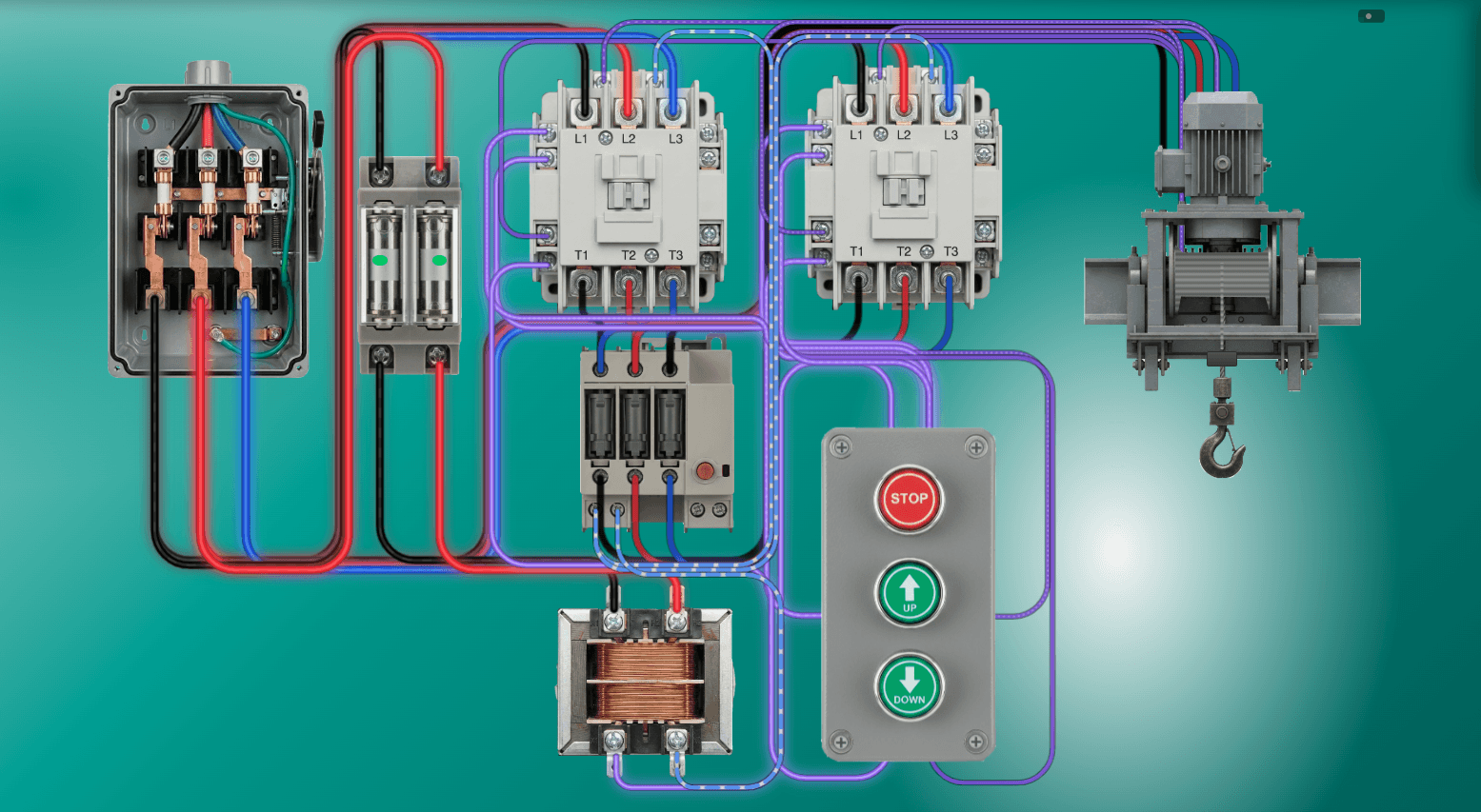
- Reversing hoist starter with two bare contactors, a standalone overload relay, electrical and mechanical interlocking, and a 24V control transformer — diagnose faults across forward and reverse paths
- Variable frequency drive trainer — wire and program a PowerFlex 525, commission analog speed control, then retrofit the circuit with a 4–20 mA current loop and a dual-channel Safe Torque Off E-stop